Quran Recitation and Lessons: Search results for surah

Hot

Post Top Ad

Showing posts sorted by date for query surah. Sort by relevance Show all posts

Friday, December 25, 2020

History of the Islamic Empire: The First Four Caliphate In Islam

December 25, 2020 2

khalifa in islam

The Four Caliphs were the first four leaders of Islam Symbols that succeeded the Prophet, Muhammad. They are sometimes called the "Rightly Guided" Caliphs because each of them learned about Islam directly from Muhammad. They also served as Muhammad's closest friends and advisors during the early years of Islam.

Rashidun Caliphate The time period under the leadership of the Four Caliphs is called the Rashidun Caliphate by historians. The Rashidun Caliphate lasted for 30 years from 632 CE to 661 CE. It was followed by the Umayyad Caliphate. The city of Medina served as the first capital of the Caliphate. The capital was later moved to Kufa.

Caliph Conundrums

The leader of a caliphate is called the caliph, meaning deputy or representative. All caliphs are believed to be the successor to Prophet Muhammad. Muhammad was not a caliph; according to the Quran, he was the last and greatest of the prophets.

Rashidun, (Arabic: “Rightly Guided,” or “Perfect”), the first four caliphs of the Islamic community, known in Muslim history as the orthodox or patriarchal caliphs: Abū Bakr (reigned 632–634), ʿUmar (reigned 634–644), ʿUthmān (reigned 644–656), and ʿAlī (reigned 656–661).

Selection of the Khalifa of Islam

The debate over who was the rightful representative of the prophet began immediately after his death. While the majority supported Abu Bakr – one of the prophet’s closest companions – a minority opted for his young son-in-law and cousin, Ali.

Who is Abu Bakr?

Abu Bakr was the First Caliph

The first caliph was Abu Bakr who ruled from 632-634 CE. Abu Bakr was the father-in-law of Muhammad and was an early convert to Islam. He was known as "The Truthful." During his short reign as caliph, Abu Bakr put down rebellions by various Arab tribes after Muhammad died and established the Caliphate as the ruling force in the region.

Caliphate In Islam

Umar ibn al-Khattab was the Second Caliph

The second caliph was Umar ibn al-Khattab. He is generally known just as Umar. Umar ruled for 10 years from 634-644 CE. During this time, the Islamic Empire expanded greatly. He took control of the Middle East including conquering the Sassanids of Iraq. He then took control of many surrounding areas including Egypt, Syria, and North Africa. Umar's reign came to an end when he was murdered by a Persian slave.

Present khalifa in islam

Uthman ibn Affan was the third Caliph

The third Caliph was Uthman ibn Affan. He was Caliph for 12 years from 644-656 CE. Four Caliphs, Uthman was a close companion of the Prophet Muhammad. Uthman is most known for having an official version of the Quran established from one originally put together by Abu Bakr. This version was then copied and used as the standard version moving forward. Uthman was killed by rebels in his home in 656 CE.

3rd Caliphate in Islam

Ali ibn Abi Talib was the Fourth Caliph

The fourth Caliph was Ali ibn Abi Talib. Ali was Muhammad's cousin and son-in-law. He was married to Muhammad's youngest daughter Fatimah. He is considered by many to be the first male convert to Islam. Ali ruled from 656-661 CE. Ali was known as a wise leader who wrote many speeches and proverbs. He was assassinated while praying in the Great Mosque of Kufa.

Four Khalifa In Islam

Frequently Asked Questions About Khalifa of Islam

1. Who is the current Khalifa of Islam?

There has recently been controversy regarding this matter. The reality is that for everyday Muslims and according to the Islam we know, there is no present Khalifa in Islam. Any such title that is bestowed upon anyone right now is false, and any person claiming to be a Khalifa is one that no one can trust. An ideology that propagates that the Prophet (PBUH) had a successor, and he wasn’t the final prophet cannot be true.

2. How many caliphs are there in Islam?

The first four Present Khalifa of Islam were known as the rightly guided caliphs. These were the Khalifa comprised of the companions of the Prophet (PBUH). They were all upstanding Muslims and among the best of their generation. All of them closely knew the Prophet (PBUH), and their first priority was to worship Allah and obey the Prophet (PBUH). Everything else was secondary.

3. Who was the last Khalifa of Islam?

Most Muslims who believe in Allah and uphold the strong values of Islam consider Ali (RA) as the final rightly guided Caliph. After his era, the Islamic State began to change direction, and ideologies that conflicted with Islam impacted it. Hence, while there were many Muslims who were caliphs after that, we can’t consider them to be in the category of rightly guided caliphs.

4. Did Allah mentions the caliphate?

We can find the word Khalifa in the Quran twice. In Surah al-Baqarah, Allah says that He told the angels that He would place humanity on the Earth as a Khalifa. Then, He stated the word Khalifa in Surah Sad. He said that He had made Dawud (AS) an authority or leader in the land, and He told him to judge between the people in a just way.

Conclusion

The concept of the caliphate is an important one in Islam. The four rightly guided caliphs were the ones who succeeded the Prophet (PBUH) Perfect role model of Islam. There were various methods of succession that led to their appointments. Rightly Guided Caliphs. According to Sunnis, the first four successors of Muhammad: Abu Bakr al-Siddiq, Umar ibn al-Khattab, Uthman ibn Affan, and Ali ibn Abi Talib. However, after them, the caliphate began to take on a different purpose. Muslims don’t take guidance from the caliphs after the first four ones. Any reference to a current caliph is not legitimate. 

Read More

Monday, December 7, 2020

The Evil Eye In Islam and Duas for Protection

December 07, 2020 2

Many Muslims do not realize the gravity of the evil eye. It is a very common issue that plagues many people. In fact, many apparent illnesses, sicknesses, injuries, etc., may in fact be the effects of the evil eye. The Prophet (PBUH) said that if there was anyone thing that could precede destiny, it would be the effects of the evil eye. Hence, we must understand it and realize its importance in Duas For Protection.

We can define the evil eye as the envy or jealousy people feel toward each other. People can even admire something initially, but that can change into envy, which may cause the evil eye. We must be careful of being inflicted by the evil eye as well as ensure that we don’t end up causing the evil eye, afflicting other people with it. Negativity and resentment are among the main reasons for it.

There are some verses in the Quran that we can recite as a form of protection against various evils, including the evil eye. Moreover, the Prophet (PBUH) outlined some actions we can take and duas we can recite to help us in these situations.

What does Nazar mean in Islam?

A Nazar (from Arabic ‏نَظَر‎ Arabic pronunciation: [naðˤar], the word deriving from Arabic, meaning sight, surveillance, attention, and other related concepts) is an eye-shaped amulet believed to protect against the evil eye.

What is the Evil Eye charm?

Though often dubbed as 'the evil eye', the ocular amulet is actually the charm meant to ward off the true evil eye: a curse transmitted through a malicious glare, usually one inspired by envy.

Protection Evil Eyes

Evil Eye and the Bath

One of the most well-known methods of curing the evil eye relates to taking a bath. The Prophet (PBUH) stated that a person who causes the evil eye should first do wudu. Then, someone should pour the same water that is used for the wudu onto the afflicted person, and if Allah wills, He will cure the person of the sickness.

The Prophet (PBUH) also said in another Hadith that if someone asks another to take a bath for the evil eye, the person should do so. In yet another Hadith, we see a story about a man who faced the effect of the evil eye. After that, the person who inflicted it performed wudu. Then, the water was poured over the afflicted person.

What is Ruqyah in Islam?

Ruqya (Arabic: رقية‎ IPA: [ruqja]) on the other hand summons jinn and demons by invoking the names of God, and to command them to abandon their mischiefs and is thought to repair damage believed caused by jinn possession, witchcraft (sihr) or the evil eye.

Ruqyah and Duas

Ruqyah and Duas

One of the foremost methods of gaining relief from any affliction is to recite the ruqyah. This includes recitation of various surahs and verses, including Surahs Al-Fatiha, Ikhlaas, Falaq, Nas, Ayat al-Kursi, and the last two verses of Surah al-Baqarah. After reciting these surahs, we should blow onto our hands and then rub them all over our bodies.

The Prophet (PBUH) outlined various duas that we can recite for Allah’s protection from evil, and that includes the evil eye. A’udhu bi kalimaa ‘tillaa-hit taammaati min sharri ma khalaq is one of the most common duas for health and well-being. Hasbi Allahoo laa ilaahaa illaa huwa alayhi tawak kaltu wa huwa Rabb ul arsh il Azeem is another important dua we can recite for protection.

What is jealousy a sign of?

Jealousy is an often overwhelming feeling of insecurity about a potential loss or inequity in the distribution of resources. The term is also used to describe a feeling associated with being possessive of another person, such as a partner or friend.

Jealousy a sign of

Jealousy Is Not a Must

Many people think that the evil eye can only affect someone if jealousy is involved. However, that isn’t really the case. The Prophet (PBUH) told us that if we see something in someone else’s possession that looks nice, we should say Masha’Allah or Barak Allahu feek. That is because these are ways of praying for blessings for people. We may unwittingly inflict the evil eye without realizing it.

Conclusion

The evil eye is very real, and Muslims must understand this and do what they can to avoid its effects. The effects of the evil eye can be extremely harmful. Hence, if we look at the Quran and Sunnah, we can see this topic discussed. We should take the guidance available in the Sunnah and utilize it in our everyday lives. There are many Quranic verses and duas most powerful Verse Ayta ul Kursi, 4 Quls that we can recite for protection from the evil eye.

Read More

Thursday, November 19, 2020

Spiritual Things for Muslims to do on Friday in Islam

November 19, 2020 0

Importance of Jummah

Muslims pray five times a day every day, but the most important prayer of the week is “jummah,” or the day of the gathering, on Friday.

So why is Jummah (Friday prayer) so central to the Islamic faith?

The religious significance

Muslims believe Friday was chosen by God as a dedicated day of worship. The Qur’an invokes the importance of Friday as a sacred day of worship in a chapter called “Al-Jumah,” meaning the day of congregation, which is also the word for Friday in Arabic.

Things for Muslims to do on Fridays

There are several obligatory and sunnah acts that we can do on Fridays to get the most benefits out of this blessed day.

Getting ready for Jummah prayer

Doing ghusl is one of the highly recommended sunnah before going to Jummah prayer. In fact, some people even view it as being obligatory. The Prophet (PBUH) clearly stated that people going for Jummah prayer should do ghusl, but he didn’t specify if it was mandatory or not.

Obligatory and Sunnah ActsThe ideal thing to do would be to do ghusl before going for the prayer. However, if we do it much earlier during the start of the day, that would hopefully fulfill the purpose as well. Additionally, when we depart for the prayer, then we should take care that we put on our best clothes and maintain a good appearance. Using fragrance is also advisable.

Going for Jummah prayer

Allah says in the Quran that when the Imam sounds the Adhan for Jummah prayer, Muslims must immediately stop what they are doing and head for the congregation. This is why shops and closed and markets shut during the time for prayer on Fridays. Allah ends the verse in this regard by saying that this is better for Muslims, which is almost like a warning.

Muslims should ideally arrive for Jummah before the Khutbah. This way, they can listen to the beneficial religious talk and benefit from it. The Prophet (PBUH) stated that if a person neglects Jummah and misses it on three consecutive occasions, Allah will place a seal on his heart. Hence, we must take extreme care in this regard.
Jummah prayer

Praying to Allah and sending salutations

According to Abu Hurairah, the Prophet (PBUH) mentioned something unique about Fridays. He said that on this day, there is a certain time during which when Muslims pray and ask Allah for something, Allah answers the prayer and grants them it. Hence, we should make prayer to Allah on Fridays and try to attain this huge benefit.

The Prophet (PBUH) also said that Muslims should send blessings upon him on Fridays, saying that the blessings would be shown to him.

Reciting Surah al-Kahf

One of the best things to do on Fridays is to recite Surah al-Kahf. The Prophet (PBUH) said that if a person recites this surah on a Friday, a light will illuminate him until the next Friday. Surah al-Kahf is an important surah and contains many lessons that can be of benefit to us in our day to day lives. 

Hence, we shouldn’t only read and recite the Story of Surah al Kahf, but we should also understand it. If we don’t know Arabic, we can do this via the English translation and English versions of the Tafseer, which are very beneficial.

The Benefit of Reading Surah Kahf on Friday

He who reads Surah Kahf on Friday, ALLAH will shower a light (NOOR) on a face that will last till the next two Fridays. 

Those who recite this Surah every Friday ALLAH will forgive all of his/her sins. Whoever reads Surah Kahf on Friday ALLAH will bless his house and protect him/her from poverty.
important surah in Quran

Can You Pray Jummah at Work?

Friday Prayer is obligatory for you, but it is not permissible for you to pray Friday Prayer in the room in which you have made a place for offering the five daily Prayers because the basic principle is that there shouldn't be multiple Friday Prayers except in cases of necessity.

Conclusion

There are many Jummah hadith reported on the significance of Jumu'ah. The Prophet has been reported saying: "The Jumu'ah is the pilgrimage of the poor" "Whoever misses three Jumu'ah, being indifferent to them, Allah seals his heart".

We must understand the values and importance of this day and prepare ourselves for Friday prayer. Besides, Friday prayers we must recite Surah Al–Kahf on priority. Recite Darood on Hazrat Muhammad (P.B.U.H) and Salutation too. Most importantly seek unlimited blessings and forgiveness in Friday’s special prayers.

Read More

Thursday, November 5, 2020

Importance of Hajj in Quran and 10 Hadith

November 05, 2020 0

Hajj and 10 Hadith

What is the importance of Hajj in Islam?

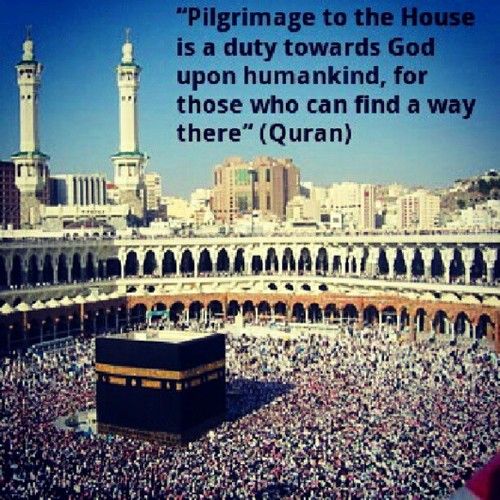
The Hajj is one of the five pillars of Islam, and all able-bodied Muslims are required to perform it once in their lifetime. The Hajj is seen as a chance to wipe clean past sins and start fresh.

What does the Quran say about Hajj?

In calling Muslims to perform the hajj, the Quran says, “Proclaim to men the pilgrimage: they will come to thee on foot and on every lean camel, coming from every remote path.” The rites of the hajj are believed to retrace events from the lives of prominent prophets such as Ibrahim and Ismail.

What is the importance of Hadith and Sunnah?

The significance and purpose of the Sunnah and Hadith. The Sunnah refers to the sayings and practices of the Prophet Muhammad and is the second source of knowledge for Muslims. Muhammad is considered to be a perfect model.

What is the most important part of Hajj?

The mountain is especially important during the Hajj, with the 9th day of the Islamic month of Dhu al-Hijjah, also known as the Day of 'Arafah after the mountain itself, being the day when Hajj pilgrims leave Mina for Arafat; this day is considered to be the most important day of the Hajj.

In which Surah of Quran is Hajj commanded?

Al-Ḥajj (Arabic: الحج‎, "The Pilgrimage, The Hajj") is the 22nd chapter (sūrah) of the Quran with 78 verses (āyāt). This surah takes its name from the 27th verse.

What is the relationship between the Quran and the Hadith?

To put it in simple words, Quran is the theoretical foundation of Islam, while Hadees about hajj provides a model of a truly Islamic lifestyle since the prophet Mohammad is an unchallengeable authority in Islam and his deeds and words, which comprise the core of Hadith, are perceived by Muslims as the model to follow.

Fifth pillar of Islam

What the Quran says about Hadith?

Hadith and Quran

"Say: "Obey Allah and obey the Messenger, but if you turn away, he (Messenger Muhammad (SAW)) is only responsible for the duty placed on him (i.e. to convey Allah's Message) and you for that placed on you. If you obey him, you shall be on the right guidance.

Hajj and 10 Hadith

  • Hajj is the fifth pillar of Islam. We must perform the pilgrimage at least once in our lives if we can afford it, and we are financially capable.
  • If we have the means to perform Hajj, we should try to do so sooner rather than later. That is because we have no guarantee of life.
  • We should recite the Talbiyah during Hajj, which signifies our obedience and worship toward Allah.
  • A Muslim who performs the Hajj complete correctly, avoiding sin, sexual relations, etc., will depart as a newborn baby, free of sin.
  • There are many Hajj rites, including doing Tawaf, offering Salah behind Maqam-e-Ibrahim, going to Mina, Arafah, Muzdalifah, and stoning the Jamarat.
  • Kissing the Black Stone is a good thing, but the Black Stone is just a stone, and it can’t harm anyone.
  • Women can perform Hajj. The Hajj from a woman that Allah accepts is a Jihad that Muslim men wage.
  • Pilgrims who visit the Kaabah, the House of Allah, are like Allah’s guests in the Holy Mosque.
  • Performing Hajj on behalf of the dead is permissible and is known as Hajj-e-Badal.
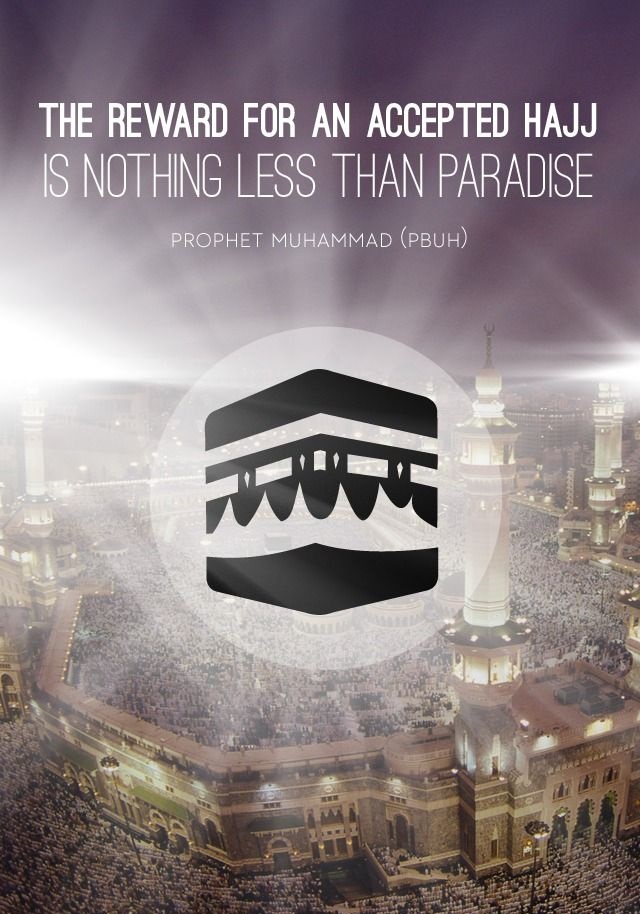
  • Hajj-e-Mabrur is a completed Hajj that is done properly, which Allah accepts. The doer goes on to attain Paradise.

Which is a more important Quran or Hadith?

Qur'an and Hadith are two vital sources of  Islamic legislation. However, Qur'an is considered more important to the Hadith because of the following reasons: Qur'an is a word of the Creator; Allah (SWT) while Hadith is a saying of a man (such as the Prophet (s.a.w.a) or the Imams (AS)).

Reward in Islam

Conclusion 

It also seems likely that the religious element of the Hajj plays a role beyond providing a cooperative setting. For example, Hajjis’ changed attitudes on gender appear to be circumscribed by those norms broadly accepted in Islam. Further, it is plausible that the religious context provides the legitimacy that makes it acceptable for adherents to alter their views. 

At the end of the Hajj, Muslims from all over the world celebrate the holiday known as the Eid ul Adha or Festival of the sacrifice.

This festival commemorates the obedience of the Prophet Ibrahim when he was ordered to sacrifice his son Is'mail.

Ibrahim proved his love and devotion to Allah by showing his willingness to kill his beloved son if Allah wished it. In the end, Ibrahim did not have to kill his son as Allah gave him a ram to sacrifice instead.

TAKING ADVANTAGE OF DHUL HIJJAH

Read More

Wednesday, October 14, 2020

Surah Mulk Listen,Read and Importance's of Benefits

October 14, 2020 0

Surah Mulk Listen,Read and Importance's of Benefits

Importance and Benefits of Surah Mulk

The Holy Quran’s 67th chapter is Surah Mulk. It is a short surah, easy for Muslims to memorize. Muslims should try to do that and recite it often, including during prayers and at night.

The surah talks about Allah’s might and His bounties for humanity. Allah asks humans at one point whether they would be able to sustain themselves without His assistance. He also focuses on the disbelievers and the punishments they will be given in the Afterlife. He instructs Prophet Muhammad (PBUH) to warn them but says many of them won’t accept and will instead suffer in the Afterlife.

In one Hadith, Prophet Muhammad (PBUH) said that if someone recites Surah Mulk regularly, the surah will intercede for that person on the Day of Judgment and ask Allah to grant the person forgiveness. It would do this until Allah forgave the person’s sins and admitted him into Paradise.

We also learn in other Hadith that reciting this surah is a way of gaining protection from the torment of the grave. The suffering of the grave is a part of Islamic belief, and avoiding that is desirable. Hence, we should memorize this surah and recite it often so that Allah may protect us from the events that occur immediately after death.

What does Surah Mulk talk about?

Surah al-Mulk (Arabic: الملك‎, "Sovereignty, Kingdom") is the 67th chapter Surah Mulk Blessings of the Quran, comprising 30 verses. The surah emphasizes that no individual can impose his will on another; he may only guide and set an example (67:26).

What is the theme of Surah Al Mulk?

Surah Mulk stresses that no one can force his will on another; he can only direct and set an example (67:26). Surah Mulk takes its name from the very first sentence. Surah Mulk draws attention to the expanse and subtlety of creation as a Sign for the majesty and power of the all-Compassionate

What is Mulk in Islam?

The name Mulk (Arabic writing: مولك) is a Muslim boys Names. The meaning of the name Mulk is " Kingdom, sovereignty, supreme "

67th chapter (surah) of the Quran

What is the punishment of the grave in Islam?

Punishment of the Grave (Arabic: عذاب القبر‎ ʿAdhāb al-Qabr, also translated torment of the grave) is a Judeo-Islamic concept whereby in the time between death and resurrection on the Day of Judgement.

What surah saves you from the punishment of the grave?

And if you do not then here it is, It is reading Surat Al-Mulk; surah 67 in the Quran. To save yourself from the punishment of the grave you must read it every night, act according to its rulings, and believe in the information mentioned in it.

The Benefits of Surah Mulk Reciting

Surah Al-Mulk off by Heart, its 30 verses in length, I will post 1 line every other day thus giving all 60 days in total to learn this Surah off by Heart. Please come and join in the Journey to learn. The Surah that hadith say, I wish that every Muslim learns this Surah that starts with the 1st word being (Tabarak-Blessing) would be in the heart of the Muslims, as its protects you while you in sleep ON the earth in bed and protects IN the earth meaning Grave from (Adhaab al Qabr- grave punishment) while you wait for the day of judgment.

Punishment of the grave in Islam

In the heart of every belief

“Blessed is” would be in the heart of every believer.” hadith.

Recitation before sleeping

The book of Allah a Surah thirty passages long; whoever reads it when he sleeps thirty good deeds are written for him; thirty wrong actions are omitted and he is raised thirty degrees. Allah sends an angel to spread his wings over him and protect him from everything until he wakes up. It is the disputer who argues for it reader in the grave and it is Tabarak alldhi biyadihi l-Mulku.” (Sura Mulk)

With reference to Sahih Hadith, what is the significance of Reading Surah Mulk daily?

Surah al-Mulk (The Kingdom)

This surah was revealed in Makkah and it has 30 ayat. It is also called Munjiyah because it saves the one who recites it from the torment of the grave. The Holy Prophet (s.a.w.) likened the recitation of this surah to the staying awake on the night of Qadr. He (s.a.w.) also wished that every believer would memorize this surah and know it by heart. He said that this surah will remove its reciter from Hellfire and take him to Jannah.

Great Reward and Benefits Surah Mulk Reciting

Imam Ja’far as-Sadiq (a.s.) said that reciting this surah at night keeps one under the protection of Allah (s.w.t.) until morning. Recitation on the night of Eid gives the reward of staying awake the whole night in worship. If recited on a person who has just died, his soul gets immediate relief. Memorizing this surah has a great reward. I memorized, this surah acts as a protection from the torment of the grave, and it intercedes on behalf of the one who has memorized it on the Day of Judgement.

Why the night may have been Recommended?

The issue I believe many Muslims struggle with is they try something they’ve heard and may have stuck with it for a few weeks but eventually the momentum falters and the streak of the habit breaks.

Scientifically, if you’re looking to form a new habit that will be repeated effortlessly, it has been shown that it helps to stack the new routine with an existing so the action can be easily repeated. If you strive to read at night, this is a good thing, and here’s an effective tip that will help you.

Have the Quran placed by your bedside with a bookmark on Surah Mulk? After making your bed, place the Quran on top of your pillow. When you return to your bed at night it will require no additional willpower to remember to read Surah Mulk, the task of Recitation night before Sleeping just became exponentially easier.

Read More

Wednesday, October 7, 2020

Rewards of Last Two Ayats of Surah Baqarah

October 07, 2020 1

Last Two Verses of Surah Baqarah

The Last Two Verses of Surah Baqarah

Reciting the last two verses of Surah Baqarah is a very beneficial act. Many Muslims all over the world recite it at night and before sleeping. People also recite them during their salah. The reason for this is that according to authentic Hadith, reciting these two verses at night is a means of gaining Allah’s Protection from all kinds of evil. Additionally, according to Hadith, the last verse of Surah Baqarah is a light that Allah granted the Prophet (PBUH) with, which He didn’t give to any other prophet previously.

In these last two verses of Surah Baqarah, Allah focuses on man’s religious obligations and his relationship with His Lord. Allah begins the 285th verse by focusing on the fact that Muslims have believed in the revealed Quran, and they accept the articles of faith. He says that we don’t differentiate between prophets, and we obey Allah.

To start the final verse, Allah says that all souls will get what they have earned, for the good and the bad they did on Earth. He says that He doesn’t burden a soul beyond what it can bear. Then, Allah provides us with a dua that we can often recite, wherein we ask Him to spare us of burdens He put on people in the past, and to pardon and forgive us. We complete the dua when we say that Allah is our Protector, and we ask Him to make us triumphant against the disbelievers.

What is the story of Surah Al Baqarah?

Surah al Baqarah has a story of children of Israel wherein there are different categories of people in different generations. In this chapter of the Quran, there are prophets and messengers wherein people have argued time and again and did not obey Allah Alone first let alone worshipping Allah Alone.

Story of Surah Al Baqarah

How many times cow mentioned in Quran?

Al-Baqara mentions the cow twice. Quite ironically, in one instance, it is mentioned in the context of sacrifice, albeit to establish a philosophical point. Verses 67-73 retell the story of Moses (Musa to Muslims) when he communicated God's command to his people to sacrifice a heifer.

What is the main theme of Surah Al Baqarah?

A major theme is guidance: urging the pagans (Al-Mushrikeen) and the Jews of Medina to embrace Islam and warning them and the hypocrites (Munafiqun) of the fate God had visited in the past on those who failed to heed his call.

How many Surahs are in each para?

30 Para of Quran or Juz name in English or Arabic

The first Para or Juz of the Quran is Alif-laam-meem(آلم ) which has 2 Surahs the first one is Surah Al-Fatiha and another one is Al-Baqarah. 2.

Which is the shortest Ayat in the Quran?

Al-Kawthar

The chapters or surahs are of unequal length; the shortest chapter (Al-Kawthar) has only three verses while the Longest Chapter (Surah Baqarah) contains 286 verses. Of the 114 chapters in the Quran, 86 are classified as Meccan, while 28 are Medinan.

Islam In One Ayat


Conclusion

To conclude, there are many benefits for those who recite the Last Two Verses of Surah Baqarah during the night, understanding and practicing them in their daily lives. Furthermore, the hadith that states the benefits of it is an authentic hadith from Sahih al-Bukhari which is the second authentic book after the Quran. Lastly, may Allah SWT make us from among the people of the Quran and those who love and practice the Quran. 

He revealed two verses concluding the Al-Baqarah chapter. If these two verses are recited at a house for three nights, Satan never approaches this house). Also, the Prophet said: (we, Muslims were referred to other nations by virtue of three qualities: all the earth is a place for prayer for us, its dust is a purification for us, our rows are like those of angels, and I was given these verses who conclude Al-Baqarah chapter from a treasure beneath the throne that none before or after me shall be given like them). How it comes for any Muslim having been aware of the virtue of these two verses to neglect to recite them every night?! Brother, Keep in mind that reciting them does not take more than two minutes!

May Allah enable us to recite Surah Al-Baqarah often and may He help us to reflect on the meaning of the words. May He also make our recitation of the Surah a means for us to be successful on the Day of Resurrection.

Read More

Friday, October 2, 2020

Perfecting the Tahajjud Pyarer (Night Prayer)

October 02, 2020 0


Perfecting the Tahajjud  Pyarer (Night Prayer)
Perfecting the Tahajjud  Pyarer (Night Prayer) 

Allah informed us in a Hadith Qudsi that Muslims can become closer to Him by performing voluntary acts of worship. These enable us to earn Allah’s love. There are several mandatory acts of worship that we must perform, including the five pillars, such as uttering shahadah, offering the five daily prayers, giving annual zakat, fasting in Ramadan, and performing pilgrimage once. After all of these actions, one of the most blessed voluntary acts of worship we can do it to offer Tahajjud.

Also known at Qiyam-ul-Layl and Night Prayer, Tahajjud is something that the Prophet (PBUH) performed often. He would do so until his feet were swollen. We also know through Hadith that Allah comes to the lowest heaven during the last third of every night. As He does this, He asked believers to remember Him. He answers duas and prayers during this time and blesses people asking for forgiveness.

The Timing for Tahajjud

We can pray Tahajjud between the time of Isha and the break of dawn. Hence, that is a reasonably lengthy period during which we can offer this voluntary act. However, the best time to offer this prayer is during the last third of the night when Allah descends to the lowest heaven.

We can Pray Tahajjud any time after Isha. However, the ideal time is during the last third of the night. Additionally, we can stay up and pray during the night. But the more rewarding deed is to go to sleep, and then wake up to offer Tahajjud.

Tahajjud any time after Isha

How Many Rakat?

During Tahajjud, we should offer two rakats at a time. If we want to pray eight rakats, it should be two, two, two, and two. The most common method is to offer 11 rakats in total, which is what Prophet Muhammad (PBUH) did. He offered eight for Tahajjud, and then performed the three rakats of witr.

However, you can pray more or less than that. As little as two rakats are enough to serve the purpose. Moreover, we should delay praying witr with Isha when we intend to pray Tahajjud. This is because the most ideal method is to make witr the last prayer we offer and to say it after Tahajjud.

How to Perform Tahajjud Prayer


How To Pray Tahajjud


The method for offering Tahajjud namaz or salah is relatively simple. It is the same as offering any other two rakats. You begin by standing in a clean place that is fit for praying. First, you make the intention of the prayer. This intention is in your heart, and you don’t say it out loud.

You begin by saying Allahu Akbar, raise the hands to the earlobes, and start. Place your hands on the chest. Recite the sana (opening dua), then recite Surah al-Fatiha. After this, you can recite a short surah, then bow down and perform ruku. After that, stand, and then prostrate in sujood (sajdah). Sit up and perform a second sajda.

After this, you stand up and offer another Rakat. When you’re done with the second sujood, you sit in the position of Qaida/Jalsa. You then recite Tashahud, Durood-e-Ibrahim, and a few other duas. Then, you offer Taslim (Assalamu alaikum Wa Rahmatullah). With this, you have completed two Rakats of Tahajjud prayer.

Read More

Post Top Ad

Your Ad Spot